 | BY CONSTRUCTION CLAIMS & DISPUTES | | NEWS, INSIGHTS & THE STUFF THAT MATTERS | Issue 02 · Tuesday 22 September 2026 |
|
G'day.
Here's what's on this week:
|
Where a subbie actually ranks when a builder folds
The number sitting in front of you in the queue
A scope schedule that was never a scope
|
|
|
Straight in.
|
|
|
|
Doing the Rounds
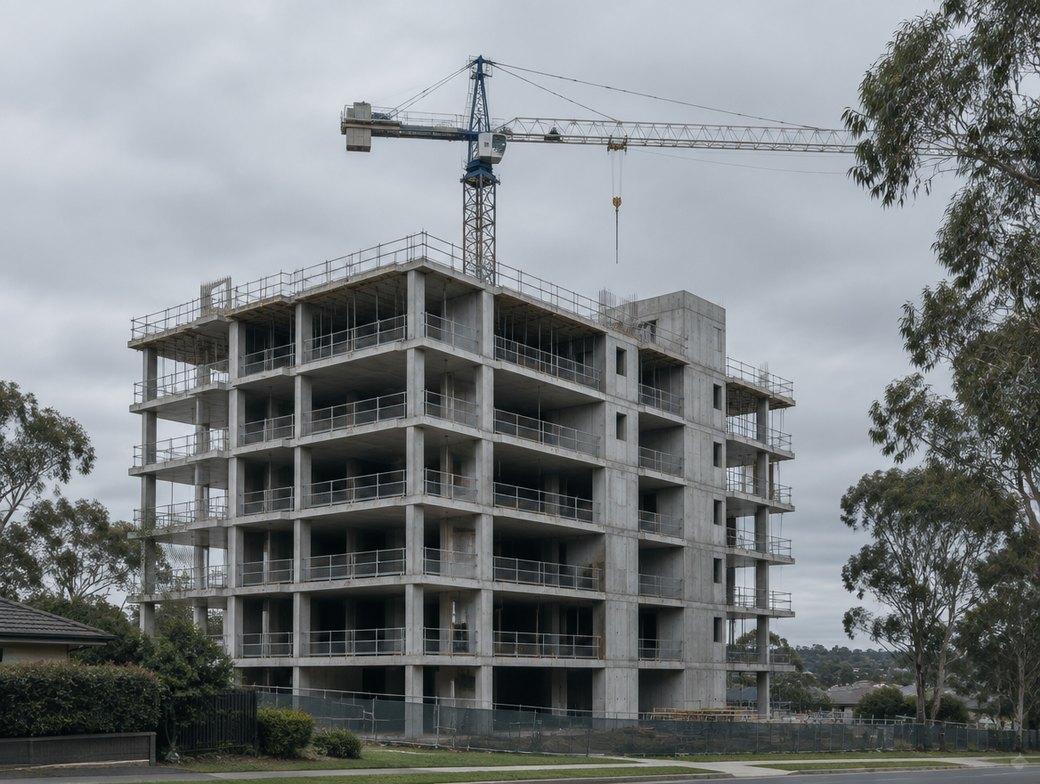
Builder Insolvency
|
|
| • | Sydney residential developer Bathla Group went into voluntary administration on 26 August 2026, with Teneo appointed. |
| • | Administrators have reported about $3.4 billion in known consolidated creditor claims. |
| • | Of that, $3.08 billion is secured lenders. Other unsecured creditors, which is where trade creditors sit, comes to about $110 million. |
| • | They also found about $736 million in overstated inter-company receivables and payables, still subject to reconciliation. |
| • | The NSW Supreme Court has extended the convening period to 13 September 2027. About 219 projects are caught up in it. |
|
What it means for you
Most of the coverage is about the money. The line worth reading twice is the date.
A convening period is the window the administrators get before they have to put the company to a creditors' vote. The court has pushed that out to September 2027. So a subbie who was owed money on a Bathla job in August does not get a vote on what happens next for another year, and the money behind that vote is a long way down the list.
Here is the order. Secured lenders come first, and there is $3.08 billion of them. Trade creditors sit in the $110 million pool at the back. That ranking is federal, out of the Corporations Act, so it works the same whether your job is in Brisbane, Sydney or Melbourne. Your state's security of payment Act is a strong tool while a builder is trading. Once an administrator is appointed, it stops being the thing that decides who gets paid.
Which is why the tells matter more than the headlines. Payment schedules that used to come back in a week and now do not come back at all. Part payments with no explanation. Someone asking you to hold off claiming this month and catch up next month. You see those on your own jobs weeks before any of this reaches the paper.
|
|
|
|
The Number
$3.08 billion
of secured lender debt ranking
ahead of every unpaid subbie
|
|
|
That is the secured lender debt in the Bathla administration, reported by the administrators this month. Behind it sit about $110 million of other unsecured creditors, which is the pool trade creditors are in.
The interesting part is not the size of either number. It is the gap between them, and the order they get paid in.
Worth knowing too that the unsecured figure was reported at about $130 million on 4 September and about $110 million by 19 September, as the administrators worked through $736 million of overstated inter-company entries. Early insolvency numbers move. Treat any of them as a position at a date, not a final answer.
Administrators' report to creditors, as reported by ABC News, 19 September 2026.
|
|
|
|
Off My Desk
They sent their own tender form back as the scope.
|

|
|
Finished a civil review a fortnight ago. Multi-residential job, inner Brisbane, pipe and civil package on a 106 working day program with no float in it.
The subbie had priced it properly. What came back to sign was the builder's own subcontract form, five schedules hanging off it, and clause 3.1 made every one of those schedules a Subcontract Document. Standard enough.
Schedule 4 was titled "Scope of Subcontract Works". So that is the scope, and you read it like a scope.
Except it was not one. It was the builder's own tender document, the one they had issued months earlier at tender stage, attached to the subcontract without ever being converted.
You could tell within a page. Section 8, "Potential Savings and Pricing Options", blank. Section 9, "Price Breakdown", every line blank, subtotal blank, provisional sums blank, rates table blank. Every item down the right hand side had an empty column where a tick for inclusion, exclusion or responsibility should have gone. And it finished like this:
|
|
Firm Fixed Price $……… Date ……… Company ……… Signature ………
|
|
|
An unsigned tender form, sitting inside an executed subcontract.
Why it bites. A tender document is written to ask questions. A contract document is written to answer them. When you staple the first one into the second, every unanswered question becomes a term, and clause 3.1 makes it binding.
Section 6 was where that got expensive. It was headed "Amendeds Subcontract" and it said the subcontract "will be a AS4901 Subcontract", which it was not. It was the builder's own form. And underneath that heading sat a complete second set of commercial terms that contradicted the ones in the actual contract.
Liquidated damages at $28,000 a calendar day, against $0.00 a day in the contract particulars. Cash retention of 10% of each claim up to 5% of the contract sum, on a job the subbie had priced with retentions excluded. A defects liability period of 52 weeks from practical completion of the whole project, when the contract said 12 months from practical completion of his own works. On a job running months past his last pour, that is a different obligation entirely.
What it teaches. The title on a document tells you nothing about what it does. A schedule called "Scope of Works" can carry a liquidated damages rate, a retention regime and a defects period, and if the contract names it as a subcontract document then it binds you whatever it is called. Read the schedules with the same eye you read the general conditions.
Watch for. Blank price boxes, empty tick columns, and a signature line with nothing on it. Those three say tender document, not contract document. And any schedule that names a different contract form to the one in front of you, because it means nobody converted it.
General information only, not advice on your situation. What a schedule like this does on your job turns on your contract and your facts.
|
|
|
|
Two-Minute Fix
Open the scope schedule in your last signed subcontract and look for a blank.
A scope written for a contract has no blanks in it. A tender document does, because it was written for you to fill in. Blanks are the fastest way to tell which one you have got.
How:
| 1. | Find the schedule your contract names as the scope of works. |
| 2. | Scroll to the end. If there is a price line, a date line or a signature line sitting empty, it started life as a tender form. |
| 3. | Check the pricing sections. Blank subtotals and empty rate tables say the same thing. |
| 4. | Now read it properly, because whatever is in there is binding. |
If it is a tender form, raise it before you sign. It is a much shorter conversation than the one at final account.
|
|
|
|
|
The Toolbox
The Delay Template Pack
The two notices that keep a delay off your back.
A builder going under is a delay event before it is anything else. So are late drawings and a crane down for a week. What you send at the time is what decides whether the days come off your program or out of your pocket.
Both notices are in there. A Notice of Delay for when it happens, and an Extension of Time claim to ask for the days once you know what it cost you. Each comes as a blank template and a completed example, with a short walkthrough video.
Your contract sets the notice windows, and they vary, so read your delay clause first.
|
|
|
|
Free, and there is no form to fill in. A starting point, not a substitute for a proper look at a long or disputed delay.
|
|
|
|
The Academy Bit · this is the ad
That schedule above came out of a contract review. It is the only reason anyone read page forty of an attachment nobody thought was a contract document. Contract Risk Review, $2,750 + GST. Every clause and every schedule read, a departures schedule you can hand straight to the builder, a walkthrough call so you know what you are asking for and why, and one round of dealing with their response. If there is a subcontract sitting unsigned on the ute seat, that is the moment it is worth doing. After it is signed we are having a different conversation, and a dearer one. Reply to this email, or ring me and we will talk it through. Not ready for a full review? Hit reply with the clause that is bothering you. |
|
|
That's the week.
Go and look at the scope schedule in your last contract. If it turns out to be a tender form with the blanks still in it, hit reply and tell me what was in it. I will run the good ones.
See you next smoko.
- Jason
|
|
Construction Claims and Disputes.
38 years on the tools and in the paperwork.
This is the web copy of Smoko, the weekly email from Construction Claims and Disputes. Get it in your inbox. General information only, not legal advice. PO Box 918, Paddington QLD 4064 |
|
Get the next one in your inbox.
Smoko lands every Tuesday morning. Free. Unsubscribe any time.
Join Smoko free
|